Minimal Space. Maximum Impact! Designed for when every millimeter matters> the new IRONLESS UNANO SERIES
Semiconductors
Increase throughput and precision of your system
Display
Enhance accuracy and precision with linear motors
Science and aerospace
Improve motion quality for a variety of applications
Machine tooling
Robust solutions for increased speed and precision
Digital cutting
Create modular and high throughput applications
Printing
Increase printing speed and quality using linear motors
Robotics
Integrate compact solutions for guaranteed uptime and high dynamics
Life science
Establish precise and clean integrated solutions
Woodworking
Maximize performance and accuracy for high throughput
Stages and system solutions
Compact integration and high performance for your axis
Vacuum applications
Best performance for clean and vacuum applications
Characteristics
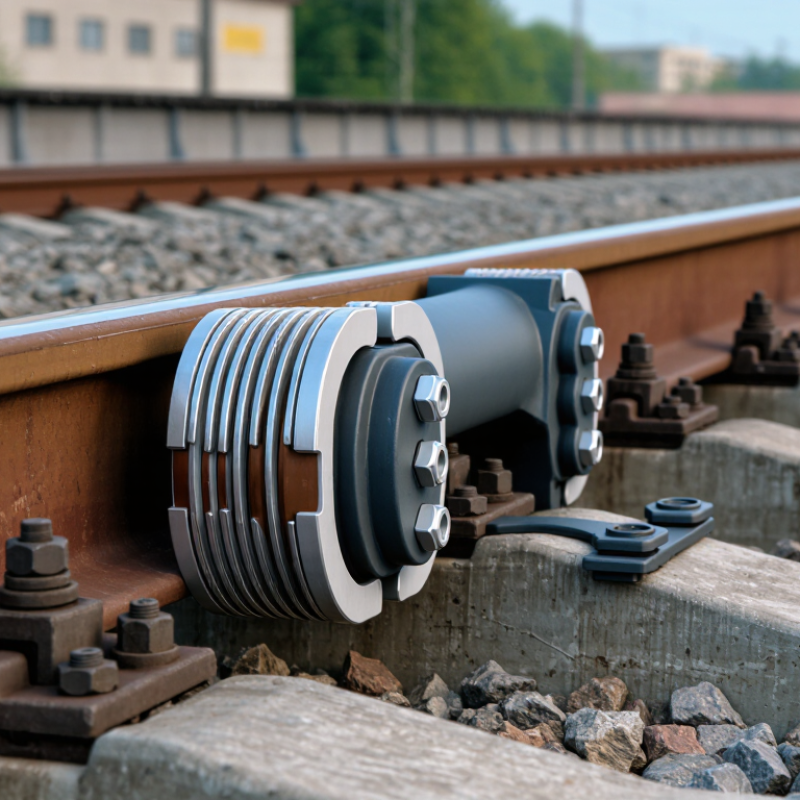
A Rail Web Broadband Damper is a trackside device designed to reduce vibration and noise along the rail web. The rail web is the vertical section between the head and foot. It flexes when wheels pass over the track. That movement can radiate sound into nearby streets, platforms, buildings, and tunnels.
Unlike a narrow-band solution, a broadband damper works across a wider range of vibration frequencies. Its performance usually comes from a carefully selected combination of steel, elastomeric material, and clamping force. These parts absorb energy as the rail bends. The result can be a quieter and more stable track environment, although results depend heavily on rail condition and installation quality.
Railway acoustics specialist Dr. David Thompson offers a useful principle: “A damper works only when its design matches the vibration problem.” That warning matters. A Rail Web Broadband Damper is not a universal cure. It cannot correct poor rail grinding, loose fasteners, wheel defects, or a badly designed track system.
Field experience shows why measurement must come first. Engineers may place sensors near the rail web, record passing-wheel frequencies, and compare vibration before and after installation. Small details matter. A two-millimetre gap can change contact pressure. Dirt can affect long-term performance.
The terminology can also be confusing. “Broadband” does not mean every frequency disappears. It means the damper targets a broader operating range. That distinction is easy to miss.
A reliable assessment should consider noise limits, maintenance access, climate, rail profile, and lifecycle cost. The best solution is measured, installed carefully, and checked again after service begins.
A rail web broadband damper is a vibration-control device fixed to the vertical web of a rail. It normally uses a constrained mass, resilient layers, or both. The device absorbs bending energy across a broad frequency range. This differs from a narrow-band damper, which targets one dominant frequency.
Its purpose is practical: reduce rail vibration, rolling noise, and structure-borne noise near sensitive buildings. The rail web carries bending motion created by wheel and rail contact. When the damper moves out of phase, it dissipates part of that energy as heat. The European Environment Agency’s Environmental Noise in Europe 2020 report estimated that about 6.5 million people in Europe were exposed to railway noise above 55 dB Lden. The figure shows the scale of the problem, though it does not prove that every site needs a damper. Track form, wheel condition, speed, and ground conditions all matter. A tidy laboratory result may weaken outdoors.
Tips: Check the target frequency range before selection. Inspect fasteners, clearance, corrosion, and drainage during routine maintenance. Measure noise before and after installation. Use standardized procedures, such as those referenced in EN 16272, so results remain comparable. Do not judge performance from one quiet night. Weather and traffic patterns can distort readings. In practice, broadband dampers can help, but they are not a magic fix. Their value depends on correct placement and verified field data.
| Data Dimension | Typical Description or Value | Definition, Function, or Practical Significance |
|---|---|---|
| Basic Definition | A passive rail-vibration control device | A rail web broadband damper is a mechanical damping assembly fitted to the web of a rail to reduce vibration and structure-borne noise generated during wheel–rail contact. |
| Primary Installation Location | The vertical web between the rail head and rail foot | The device is normally positioned along the rail web, where it can interact with bending and flexural vibration modes without changing the running surface of the rail. |
| Main Operating Principle | Energy dissipation through damping | Relative motion between the rail and the damper converts part of the rail’s vibrational energy into heat, reducing vibration amplitudes over a broad frequency range. |
| Meaning of “Broadband” | Effective across multiple frequency bands | Unlike a narrowly tuned absorber designed for one dominant frequency, a broadband damper is intended to provide useful attenuation across a wider range of rail vibration frequencies. |
| Typical Frequency Coverage | Approximately 100–5,000 Hz, depending on design and rail conditions | The effective range varies with rail section, fastening stiffness, damper mass, damping material, installation quality, and vehicle operating conditions. This range is indicative rather than universal. |
| Common Damper Construction | Mass element combined with an elastomeric or viscoelastic damping interface | The mass and resilient interface are designed to move relative to the rail and dissipate vibration energy. Some designs use enclosed or preloaded assemblies for environmental protection and consistent contact. |
| Typical Rail Compatibility | Grooved rail, flat-bottom rail, or other compatible rail profiles | Compatibility depends on the rail geometry, available web clearance, fastening arrangement, clearance envelope, and the damper’s attachment method. |
| Attachment Methods | Clamping, bolting, or purpose-designed rail-side fastening | The attachment must maintain stable contact with the rail while allowing the damper to operate as designed. Installation should follow the applicable rail infrastructure requirements. |
| Primary Purpose | Reduction of rail vibration and rolling noise | The damper helps reduce vibration radiated by the rail and can lower airborne noise and structure-borne vibration in nearby buildings, platforms, tunnels, and track-support structures. |
| Noise Sources Addressed | Rail-radiated rolling noise and vibration-related noise | It is most effective when rail vibration is a significant contributor to overall railway noise. It does not directly eliminate wheel roughness, rail corrugation, aerodynamic noise, or poorly maintained track conditions. |
| Expected Acoustic Benefit | Application-specific; commonly assessed in decibels (dB) | The achievable reduction depends on train speed, wheel and rail roughness, track support, acoustic environment, damper coverage, and measurement position. Performance should be verified through field or laboratory testing. |
| Passive or Active System | Passive | A passive damper requires no external power, sensors, or control system during normal operation, which can simplify installation and maintenance. |
| Effect on Rail Geometry | No intentional change to the running surface | The damper is attached to the rail web rather than placed on the rail head, so it is designed to control vibration without altering wheel contact geometry. |
| Effect on Track Capacity | Normally compatible with existing traffic operation | Because the device is passive and rail-mounted, it generally does not impose an operational capacity limit by itself. Clearance, inspection, maintenance, and safety requirements must still be checked. |
| Key Design Parameters | Mass, stiffness, loss factor, attachment force, and rail compatibility | These parameters determine the damper’s dynamic response and influence the frequency range, attenuation level, durability, and suitability for a particular track form. |
| Environmental Requirements | Resistance to moisture, dust, temperature variation, and rail-service contamination | Materials and protective housings should withstand outdoor railway conditions, including water exposure, dirt, vibration, ultraviolet radiation, and temperature changes. |
| Inspection Considerations | Fastener security, position, damage, wear, and clearance | Routine inspection should confirm that the damper remains securely attached, does not interfere with railway equipment, and has no visible cracking, deformation, corrosion, or material degradation. |
| Best-Practice Application | Use with rail and wheel condition management | Rail web dampers are most effective as part of a broader noise and vibration strategy that may include rail grinding, wheel maintenance, resilient fasteners, barriers, or other track treatments. |
| Important Limitation | Performance is not universal | Actual results must be determined for the specific rail profile, track structure, vehicle fleet, speed range, noise source, and installation arrangement. A site assessment and measured verification are recommended before large-scale deployment. |

A rail web broadband damper reduces vibration and noise through energy dissipation. It attaches to the rail web, the vertical section beneath the rail head. Unlike a narrow-frequency device, it works across several vibration ranges. This broader response supports changing wheel loads, speeds, and track conditions.
The main assembly usually includes a damping mass, resilient elements, mounting brackets, and fastening hardware. The mass may use steel or another dense material. Elastomeric pads separate the mass from the rail and convert vibration into heat. Brackets must hold the device firmly without restricting rail movement. Bolts need controlled tightening, because excessive pressure can damage the resilient layer.
Structural design depends on clearance, weight distribution, and long-term durability. The damper should fit beneath the rail head without touching wheels, clips, or maintenance tools. Its center of mass must remain stable during repeated loading. Protective coatings can limit moisture and corrosion, especially near ballast and drainage paths. Practical inspections often reveal small alignment problems before serious performance loss appears. That matters.
No design is perfect. A heavier damper may improve low-frequency control but increase installation demands. A softer pad may absorb more energy but age faster. Engineers should verify these trade-offs through vibration testing, fastening checks, and periodic field inspections. Design drawings alone cannot reveal every site-specific problem.
A rail web broadband damper is a compact device attached to the rail web. It reduces vibration across a wide frequency range. Unlike a simple stiffener, it dissipates vibrational energy through friction or viscoelastic movement. Wheel passage excites the rail, especially near joints, curves, and rough contact zones. The damper converts part of that energy into small amounts of heat. Less vibration can mean lower rolling noise and reduced fatigue stress around the rail profile.
The European Environment Agency’s Environmental Noise in Europe 2020 report estimated that nearly 22 million Europeans experienced harmful railway noise exposure. This figure includes several noise sources, not rail web vibration alone. Still, it shows why vibration control deserves measured attention. Field testing usually compares accelerometers mounted on the web before and after installation. Engineers also check noise levels, fastening condition, temperature, and wheel roughness. A single test can mislead.
The field is less tidy than drawings suggest. A damper may perform well on straight track but respond differently in a tight curve. The European Union Agency for Railways’ 2024 safety report stresses the value of condition monitoring and evidence-based maintenance. That principle applies here. Frequency-response measurements should guide placement and spacing. Installation tolerances matter. So does cleaning the contact surface. A loose clamp can become another vibration source. Broadband control is useful, but it is not automatically better; poorly matched damping can shift vibration into an overlooked frequency band.
What Is a Rail Web Broadband Damper?
A rail web broadband damper is a compact device fitted to the rail web. It reduces vibration across a broad range of frequencies. This can help control rolling noise and limit vibration transfer into nearby structures. Its performance depends heavily on correct installation, not just the component itself.
Installation should follow the approved engineering drawing and torque requirements. Trained rail personnel should inspect the rail web before fitting the damper. Remove loose rust, dirt, paint flakes, and standing water from the contact area. The mounting surfaces must sit flush. Even a small gap can reduce clamping force and create movement during traffic. Keep the damper clear of fasteners, signaling equipment, drainage paths, and track maintenance tools. Positioning should remain consistent along the specified rail section. Uneven spacing may produce uneven vibration control.
Maintenance teams should inspect the device during scheduled track examinations. Look for loose bolts, cracked housings, corrosion, displaced parts, and fresh rubbing marks. Check torque only with approved procedures and calibrated tools. Do not rely on appearance alone. A damper can look secure while its contact pressure has weakened. Record defects, locations, inspection dates, and corrective actions. Environmental conditions matter too. Water, ballast impact, temperature changes, and repeated wheel loading can shorten service life. In practice, installation drawings are sometimes followed too quickly. That is a mistake worth reviewing after every early inspection.
What Is a Rail Web Broadband Damper?
Applications, Benefits, and Performance Considerations
A rail web broadband damper is a compact vibration-control device fixed to the rail web. It absorbs bending energy across a wide frequency range. Unlike a narrowly tuned damper, it can respond to changing wheel–rail conditions, speed, and track stiffness. Its main applications include urban corridors, curves, bridges, and areas near residential buildings. The European Environment Agency’s Environmental Noise in Europe—2020 estimated that about 22 million people were exposed to harmful railway noise levels. That figure gives noise control a practical purpose.
The damper can reduce rail vibration, structure-borne noise, and tonal squeal. However, performance depends on contact quality and installation accuracy. Field engineers should check rail profiles, fastener conditions, temperature, and damper mass. Small gaps can weaken energy transfer. Measurements should compare untreated and treated sections under similar traffic conditions. Useful indicators include vibration velocity, sound pressure, and insertion loss in decibels. Results often vary by frequency.
The World Health Organization’s 2018 Environmental Noise Guidelines recommend reducing railway noise below 54 dB Lden where possible. A damper alone cannot guarantee that target. Wheel roughness, corrugation, and bridge resonance may dominate the result. The design is rarely perfect. In practice, broadband damping works best within a wider maintenance plan. Engineers should review seasonal data, not only one night-time test. More damping is not always better; excessive stiffness can shift resonance into another frequency band.