China Top Torque Motor Manufacturers for Global Buyers

China has become a major sourcing destination for high-performance torque motor solutions. Its manufacturers serve robotics, semiconductor equipment, medical systems, machine tools, and renewable-energy applications. However, a polished catalog does not prove engineering capability. Buyers must examine test data, winding quality, bearing design, thermal control, and long-term support.

As motion-control expert Dr. Kevin Craig observes, “The best design is the simplest design that meets the requirements.” This principle matters when selecting a torque motor from China. A compact direct-drive unit may remove gears and reduce backlash. Yet it can still suffer from heat buildup, cogging, or unstable feedback if the design is poorly matched. Small details matter. Cable routing matters too.

This guide introduces leading Chinese torque motor manufacturers for global buyers. It considers product range, customization experience, production capacity, quality systems, and export support. It also looks beyond marketing language. Does the supplier provide torque-speed curves under realistic temperatures? Can it share rotor balance results and repeatability data? Does its engineering team respond with measurements, rather than promises?

The evaluation is not perfect. Public information changes, and factory capabilities may vary between product lines. Some companies communicate clearly but publish limited technical data. Others offer impressive specifications while providing weak documentation. That is why buyers should request samples, inspect tolerances, and verify performance independently.

A reliable supplier should understand the application, not merely sell a motor. This overview offers a practical starting point for comparing China’s strongest manufacturers and reducing costly selection mistakes.

China Top Torque Motor Manufacturers for Global Buyers

What Is a Torque Motor and How Does It Work?

A torque motor is a low-speed, high-torque electric motor designed to drive a load directly. It usually removes the gearbox, coupling, and several wear points. In practical terms, the rotor turns inside a large-diameter stator, producing torque around the shaft. The basic relationship is simple: torque equals torque constant multiplied by current. More current creates more torque, within thermal limits. That last condition is often underestimated.

A servo drive controls current and electrical frequency, while an encoder reports shaft position. The controller then corrects errors within milliseconds. This arrangement suits rotary tables, robotic joints, machine tools, and semiconductor equipment. Direct drive can reduce backlash and vibration, but it does not automatically improve every machine. Poor cooling can weaken continuous torque. Misaligned bearings can also waste the motor’s accuracy.

The International Energy Agency reported in its Energy Efficiency 2016 report that electric motor systems represented about 53% of global electricity consumption. The U.S. Department of Energy’s Motor Systems Market Assessment also identifies motor-driven equipment as a major industrial electricity user. These figures explain the interest in efficient direct-drive systems. However, selecting a torque motor requires more than comparing peak torque. Engineers should check continuous torque, overload duration, bus voltage, winding temperature, encoder resolution, and available cooling. A motor that survives a ten-second peak may still fail during an eight-hour production cycle. That distinction matters.

Key Features of China’s Torque Motor Manufacturing Industry

China’s torque motor manufacturing industry is built around dense supply chains, fast tooling, and flexible production. Suppliers commonly integrate magnets, copper windings, bearings, encoders, and drive electronics within one region. This shortens sampling cycles for robotics, semiconductor equipment, medical tables, and automated inspection systems. Practical experience shows that customization is often quicker than expected. Documentation can be slower.

Performance remains the central buying criterion. The IEA’s Energy-Efficiency Policy Opportunities report estimates that electric motors consume about 46% of global electricity, including roughly 69% of industrial electricity. This explains the demand for low-cogging torque motors, high continuous torque, and efficient thermal paths. China-based factories increasingly use winding automation, laser balancing, and end-of-line load testing. Buyers should request test curves, not only rated torque. Numbers without test conditions can mislead.

The MarketsandMarkets Direct Drive Motor Market report projects high-single-digit growth through 2029, driven by robotics, packaging, and precision automation. China’s advantage is not simply lower production cost. It also includes quick engineering changes, varied frame sizes, and access to motor-control components. However, quality consistency differs between workshops. A serious supplier should provide batch traceability, insulation tests, temperature-rise results, and encoder accuracy records. Independent sampling is still sensible. Even experienced buyers sometimes overvalue catalog torque and undervalue heat dissipation.

Leading Chinese Torque Motor Manufacturers and Their Product Ranges

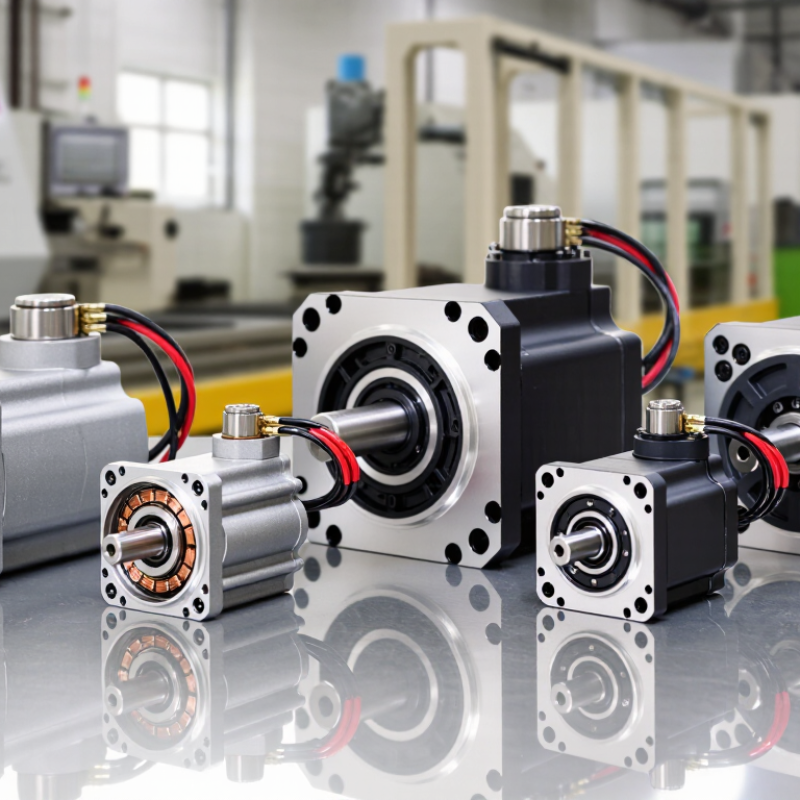
Chinese torque motor manufacturers now serve robotics, machine tools, semiconductor equipment, and precision inspection systems. Grand View Research identifies these sectors as major growth drivers for direct-drive motor demand. The product range is broad. It includes frameless torque motors, housed rotary motors, water-cooled versions, and integrated servo modules. Buyers can also request custom windings, hollow shafts, encoders, and matched drives.

The market is demanding more compact torque density. IFR’s World Robotics 2024 report recorded 276,288 industrial robot installations in China during 2023, representing about 51% of global installations. This installed base supports strong demand for low-backlash rotary motion. Chinese suppliers commonly publish continuous torque, peak torque, rated speed, thermal resistance, and rotor inertia. Serious buyers should request test curves, not only catalogue values.

In practice, product selection depends on duty cycle and cooling design. A frameless motor suits robotic joints and compact rotary tables. A housed motor simplifies installation. Water cooling helps during repeated acceleration, but it adds plumbing and maintenance. Some catalogues look impressive. Still, tolerance data may be incomplete. Verify runout, encoder accuracy, balancing grade, and lifecycle testing through factory records or independent inspection. This step is often missed. That weakness deserves reflection.

China Top Torque Motor Manufacturers for Global Buyers

Leading Chinese torque motor suppliers commonly cover frameless, housed, water-cooled, and high-torque direct-drive product families. The chart shows representative upper limits of continuous torque bands commonly offered across these product ranges, expressed in N·m. Exact specifications vary by winding, cooling method, speed, and customization.

Product-range reference: typical public supplier catalog specifications for industrial direct-drive torque motors. Buyers should confirm rated torque, peak torque, speed, voltage, and thermal conditions for each model.

How to Evaluate Torque Motor Suppliers for Global Purchasing

When evaluating China’s top torque motor manufacturers, global buyers should examine engineering evidence, not polished sales language.
Ask for continuous torque, peak torque, speed, thermal limits, and duty-cycle data. Request test reports from production samples, not only laboratory prototypes. A reliable supplier explains winding choices, magnet materials, bearing life, and encoder accuracy in practical terms. Clear drawings matter. So do revision histories.

Supplier audits should cover machining, winding, balancing, insulation testing, and final inspection. Check whether calibrated instruments support each measurement. Ask how rejected rotors are recorded and corrected. Verify quality systems, traceability, and production capacity before placing volume orders. Certifications should match the destination market, such as applicable electrical safety, electromagnetic compatibility, and restricted-substance requirements. Never accept a certificate without checking its scope and validity.

Run a small pilot order under documented acceptance criteria. Measure torque ripple, noise, temperature rise, and startup behavior at your actual voltage. Test the motor with your gearbox, controller, and mounting arrangement. Compatibility failures often appear outside the supplier’s test bench. Review packaging, spare-part support, lead times, payment terms, and change-notification procedures. A lower unit price may hide costly tuning work. No checklist is perfect. I would still leave room for an independent inspection, because one missed tolerance can weaken an otherwise strong sourcing decision.

Export Standards, Quality Control, and International Support Services

For global buyers, selecting a torque motor manufacturer requires more than comparing prices. Export readiness begins with complete technical files, including drawings, performance curves, material records, and packing specifications. Experienced suppliers prepare documents for customs clearance, product identification, and destination-market requirements. They also confirm voltage, protection rating, mounting dimensions, and operating conditions before production starts.

Quality control should be visible at every stage. Inspectors may verify copper winding resistance, insulation strength, bearing noise, rotor balance, and temperature rise. Each motor should receive a traceable serial number and a recorded test report. Sample testing is useful, but full inspection may be necessary for critical orders. Small details matter. A poorly sealed carton can damage accurate equipment during sea transport.

International support extends beyond shipment. Reliable manufacturers provide installation guidance, troubleshooting procedures, spare-part advice, and responsive communication across time zones. Clear English manuals reduce avoidable mistakes. Video assistance can help engineers check wiring or alignment remotely. However, no supplier is flawless. Lead times can change, and specifications may be interpreted differently. Buyers should request written confirmations, approve samples, and review corrective actions after testing. That discipline builds trust more effectively than impressive claims.

China Top Torque Motor Manufacturers for Global Buyers - Export Standards, Quality Control, and International Support Services

Evaluation Dimension Relevant Standard or Reference Typical Technical Requirement Quality-Control Evidence Recommended Buyer Verification
Motor safety and performance IEC 60034-1 Rated torque, speed, voltage, current, duty cycle, temperature rise, and efficiency should be stated on the technical datasheet. Routine test record, nameplate data, winding-resistance test, no-load test, and load-performance report. Compare the test report with the purchase specification and the applicable motor rating standard.
Ingress protection IEC 60034-5 / IEC 60529 Common industrial configurations include IP54, IP55, IP65, or higher when specified for dust and water exposure. IP test documentation, enclosure drawings, sealing details, and inspection records. Confirm that the declared IP rating applies to the complete motor assembly, connectors, feedback devices, and cable exits.
Insulation system IEC 60034-1 and applicable insulation-test practices Insulation class is commonly specified as Class F or Class H; the permitted temperature rise must match the design and duty cycle. Insulation-resistance test, dielectric withstand test, surge test where applicable, and winding-temperature data. Request the insulation class, test voltage, test duration, and acceptance criteria before approval.
Torque and speed capability Manufacturer datasheet and agreed application specification Continuous torque, peak torque, rated speed, maximum speed, torque ripple, and thermal limits should be separately identified. Dynamometer or test-bench curve showing torque, speed, current, temperature, and operating duration. Check whether peak torque is time-limited and whether the test uses the intended drive, cooling method, and feedback device.
Feedback compatibility Drive and encoder interface specification Available feedback may include incremental encoder, absolute encoder, resolver, Hall sensors, or sensorless operation, depending on the drive system. Pinout, signal-level information, connector drawings, alignment data, and compatibility test results. Verify electrical interface, resolution, communication protocol, cable length, connector type, and commutation alignment.
Environmental suitability IEC 60034-1; application-specific environmental requirements Operating temperature, humidity, altitude, vibration, shock, corrosion exposure, and cooling method should be defined in advance. Environmental test records, bearing and grease specification, cooling-fan data, and installation instructions. Confirm derating requirements for high altitude, high ambient temperature, enclosed cabinets, and continuous low-speed operation.
Quality-management system ISO 9001 A documented quality system should control incoming materials, production processes, calibration, nonconformities, and corrective actions. Valid certificate scope, internal audit records, calibration certificates, process-control plans, and corrective-action reports. Check certificate validity, issuing body, site address, and whether the scope covers motor design and manufacture.
Materials and traceability Contract quality plan and customer specifications Magnets, copper windings, laminations, shafts, bearings, insulation materials, and connectors should be traceable to controlled batches. Material certificates, batch numbers, incoming-inspection records, and serialized assembly records. Require traceability from the motor serial number to critical materials and final test results.
Export product compliance Destination-market requirements; CE, RoHS, and REACH where applicable Compliance depends on the product configuration, integrated electronics, destination, and intended use; a motor alone may not be assessed like a complete machine. Declaration of Conformity where applicable, technical file references, material declarations, and restricted-substance statements. Confirm the exact model, accessories, destination region, and responsible party for final system compliance.
Electromagnetic compatibility Drive-system EMC requirements and destination-market regulations Shielded cables, proper grounding, connector shielding, and installation practices are normally evaluated with the motor drive system. Wiring diagrams, grounding instructions, cable specifications, and system-level EMC test results where available. Ask whether EMC testing covered the motor, drive, cables, encoder, and cabinet as an integrated system.
Pre-shipment inspection Purchase order, inspection plan, and agreed acceptance criteria Inspection normally covers appearance, dimensions, connectors, shaft runout, rotation direction, electrical safety, and performance sampling. Signed inspection report, photographs, serial-number list, calibration records, and approved deviation records. Define sampling level, critical defects, witness-test rights, and release conditions before production begins.
Export packaging ISPM 15 for regulated solid-wood packaging Packaging should protect bearings, shafts, connectors, feedback devices, coatings, and precision mounting surfaces from impact and moisture. Packing specification, moisture protection method, shock protection, carton or crate dimensions, and package photographs. Confirm treated-wood marking where applicable and verify that packaging suits air, sea, or multimodal transport.
International shipping documentation Destination customs and agreed Incoterms® rules Common documents include commercial invoice, packing list, transport document, and certificate of origin when required. Document checklist, harmonized tariff classification support, export declaration details, and shipment tracking information. Agree the Incoterms® rule, named place, insurance responsibility, document language, and customs-data requirements.
After-sales and technical support Contract terms and service-level agreement Support should cover installation, commissioning, parameter setup, troubleshooting, spare parts, repair assessment, and warranty handling. User manual, 2D/3D drawings, wiring diagrams, recommended spare-parts list, response procedure, and warranty terms. Confirm support languages, response channels, remote-debugging capability, spare-parts availability, and escalation contacts.
Documentation package Customer technical-file and installation requirements A complete package should include datasheet, dimensional drawing, wiring diagram, operating limits, maintenance guidance, and test documentation. Controlled document revision, serial-number references, signed final inspection report, and change-history records. Require documentation approval before shipment and ensure the delivered revision matches the production model.