What Is a Flux Core Welder and How Does It Work?
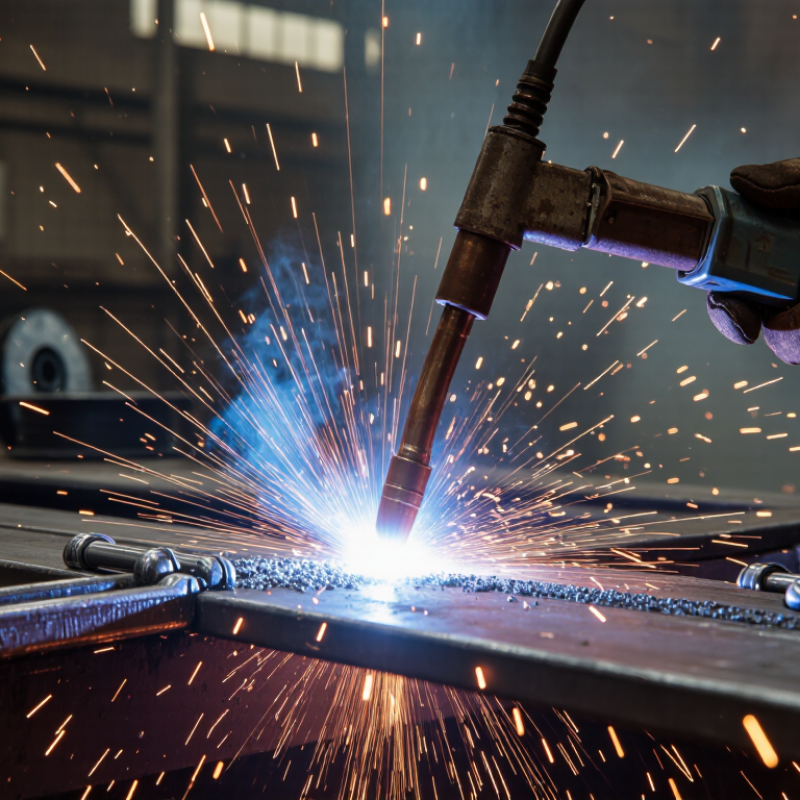
A Flux Core Welder feeds a continuously burning wire electrode through a welding gun. The wire contains flux inside its hollow metal core. When the arc melts the wire, the flux forms shielding gas and slag around the molten pool. This protects the weld from much of the surrounding atmosphere.
Welding educator Jody Collier often stresses, “A good weld starts with good preparation.” That advice fits flux-cored welding closely. Clean steel, correct polarity, steady travel speed, and suitable wire matter greatly. Even a powerful machine cannot repair poor joint fit-up. Small details show quickly. A dirty edge can create porosity. Excessive speed may leave an uneven, weak bead.
Some Flux Core Welder systems use self-shielded wire. They work well outdoors, where wind can disturb external shielding gas. Other systems use gas-shielded flux-cored wire for cleaner, controlled welds. The choice depends on the metal, position, thickness, and working environment. It is not a magic process.
Expect smoke, slag, sparks, and a noticeable learning curve. The operator must wear proper eye, skin, and respiratory protection. Ventilation also deserves attention. Beginners sometimes focus only on amperage. That is incomplete. Wire diameter, polarity, stick-out, and travel angle influence the final result.
This guide explains how a Flux Core Welder works, where it performs best, and where it can disappoint. It also examines practical setup decisions. Some recommendations vary by manufacturer. That uncertainty should encourage careful testing, not guesswork. A short practice bead on scrap steel can reveal more than confident assumptions.
What a Flux Core Welder Is
A flux core welder uses a tubular wire filled with powdered flux. The wire melts continuously through an electrically heated contact tip. Its flux creates shielding gas and a protective slag layer around the molten weld pool. Some models use only the flux core, while others add external shielding gas. This process is called flux-cored arc welding, or FCAW.
In practical work, FCAW feels forgiving on windy outdoor sites because self-shielded wire reduces dependence on a gas cylinder. It also deposits metal quickly on thicker steel. However, slag must be removed between passes. I still occasionally underestimate that step. A dirty surface, incorrect polarity, or excessive wire speed can produce wormholes, spatter, or weak fusion. The American Welding Society projected that the United States would need about 330,000 additional welding professionals by 2026, highlighting the value of learning versatile processes. The U.S. Bureau of Labor Statistics also identifies welding as a hands-on occupation requiring technical training and workplace safety awareness.
Tips: Check the wire classification, polarity, and recommended amperage before striking an arc. Keep the gun angle steady, maintain a short arc, and clean slag completely. Wear a properly rated helmet, gloves, flame-resistant clothing, and suitable ventilation. Practice on scrap steel first. Real materials behave differently. A weld can look acceptable while hiding poor penetration, so visual inspection alone is not enough.
What Is a Flux Core Welder and How Does It Work?
Flux-cored arc welding (FCAW) uses a continuously fed tubular wire electrode filled with flux. The chart shows representative welding-current ranges commonly used with different FCAW wire diameters. Actual settings vary with the wire type, material thickness, welding position, and shielding method.
The Main Parts of a Flux Core Welding System
A flux core welder uses a continuously fed wire to create an electric arc. The wire melts and joins two metal surfaces. Unlike solid wire welding, flux-cored wire contains shielding ingredients inside its hollow center. As the wire burns, the flux forms protective gas and slag around the weld pool. This helps reduce contamination from air.
The main parts of a flux core welding system are the power source, wire spool, drive rollers, welding gun, contact tip, and ground clamp. The power source controls welding voltage and current. Drive rollers push the wire through the gun at a steady speed. The contact tip transfers electricity into the wire. Meanwhile, the ground clamp completes the circuit through the workpiece. I always inspect these connections before welding. A loose clamp can cause an unstable arc and uneven penetration.
Tips: Keep the gun angle consistent, usually with a slight drag motion. Remove slag only after the weld cools. Match the wire diameter to the metal thickness. Clean rust, paint, and oil from the joint. In practice, settings are rarely perfect on the first attempt. I often adjust wire speed in small steps after watching the arc sound and bead shape. Too much spatter may indicate poor settings, incorrect technique, or contaminated metal. Wear a proper welding helmet, gloves, protective clothing, and adequate ventilation. Even experienced welders can overlook airflow.
How Flux Core Welding Creates a Weld
Flux core welding creates a weld by feeding a hollow wire through a welding gun. An electric arc forms between the wire and the metal surface. This arc produces intense heat, melting both materials into a small pool. The molten wire fills the joint as the gun moves steadily along the seam.
The wire’s inner flux plays a critical role. As it burns, it releases shielding gases that protect the hot weld from oxygen and nitrogen in the air. It also forms a layer of slag over the cooling bead. Some flux core wires need additional shielding gas, while others work without a gas cylinder. The correct wire depends on the metal, joint design, and working conditions.
Keep the gun angle consistent. Too much travel speed can leave an undersized bead, while moving too slowly may create excessive buildup. I have found that a short practice weld reveals more than a perfect-looking setting chart. The first pass may appear uneven. That is useful evidence, not failure. After cooling, chip away the slag and inspect the bead for cracks, pinholes, or poor fusion. A clean, dull metallic surface usually shows whether the arc reached both edges. Small adjustments to voltage, wire speed, and travel angle can change the result quickly. Safety still matters: wear proper eye protection, gloves, flame-resistant clothing, and ensure adequate ventilation.
Types of Flux Core Welding and Their Uses
What Is a Flux Core Welder and How Does It Work?
Types of Flux Core Welding and Their Uses
A flux core welder feeds tubular wire through a gun and melts it into the joint. The wire contains powdered flux, which forms protective gas and slag during welding. This process handles thicker steel efficiently and tolerates less-than-perfect surface preparation. According to the U.S. Bureau of Labor Statistics, welding occupations may decline 2% from 2023 to 2033, yet about 42,600 openings could appear annually. Skilled process selection still matters.
Self-shielded flux core welding, or FCAW-S, carries its own shielding ingredients. It suits outdoor repairs, structural steel, farm equipment, and locations where wind makes gas shielding unreliable. The operator must remove slag between passes. A small amount can cause trapped inclusions or an uneven bead. Outdoor work feels convenient, but wind remains a serious variable.
Gas-shielded flux core welding, or FCAW-G, uses external shielding gas for cleaner, more controlled welds. It commonly serves fabrication shops, heavy machinery, pressure-related components, and long production seams. FCAW-G usually produces less visible spatter than FCAW-S. However, it needs stable gas flow, correct polarity, and cleaner joint preparation. A 0.9-millimeter wire may work well on medium steel, but thickness, position, and wire classification must guide the final choice. The easy assumption is that higher amperage always improves penetration. It does not. Poor travel speed can still create undercut, porosity, or excessive slag.
Key Settings, Materials, and Safety Practices
A flux core welder feeds a hollow wire through the gun. The wire contains shielding compounds. An electric arc melts the wire and base metal, while its flux forms protective slag. Unlike gas-shielded welding, self-shielded flux core welding performs well outdoors. Wind can still disturb the arc.
Key settings depend on wire diameter, steel thickness, and welding position. Start with the wire manufacturer’s voltage and amperage range. A 0.030-inch wire often suits thinner sheet, while 0.045-inch wire handles heavier plate. Set wire feed speed with the voltage. Too much feed creates a harsh, stuttering arc. Too little produces long, unstable sparks. I check bead shape, sound, and penetration together. One setting rarely fits every joint. That assumption fails.
Clean carbon steel improves reliability. Remove oil, paint, rust, and loose scale near the joint. Use suitable polarity; self-shielded wire commonly requires direct-current electrode negative, but the specification controls. Slag must be chipped and brushed between passes. Safety requires a proper helmet shade, flame-resistant clothing, gloves, and dry work surfaces. OSHA 29 CFR 1910.252 requires ventilation and protective measures for welding operations. NIOSH lists a 1 mg/m³ ceiling for manganese compounds, while OSHA limits hexavalent chromium exposure to 5 µg/m³ over eight hours. Local extraction matters. A respirator does not replace ventilation. I still inspect cables and gun liners before every session. Small defects become serious quickly.