How to Choose a Permanent Magnet Motor?
Choosing a permanent magnet motor is not a matter of selecting the highest efficiency figure on a product sheet. The right choice depends on the machine, its load, and how it operates throughout the day. A motor driving a conveyor at steady speed faces different demands from one powering a pump with frequent starts. Details matter.
Professor Iqbal Husain, an electric-machines researcher and author, has extensively studied motor design and drive systems. A useful paraphrase of the engineering lesson reflected in his work is: “Select the motor as part of the complete drive system, not as an isolated component.” This is a paraphrase, not a verified verbatim quotation. That distinction matters when technical guidance needs to be trustworthy.
This guide explains how to compare power, torque, speed range, efficiency, cooling, and control requirements. It also considers the practical limits that catalog tables can hide: ambient heat, overload duration, mounting space, and the inverter’s capabilities. Check the duty cycle. Inspect the operating environment. Verify the specifications against the actual application, not an ideal test condition. Small mismatches can mean extra heat, unexpected noise, or costly redesign.
Some trade-offs remain. A compact motor may save space but require more careful thermal management. A higher-efficiency rating may not guarantee lower total system costs. Use the recommendations as a starting point, then confirm critical choices with the manufacturer or a qualified engineer. One detail can change everything.
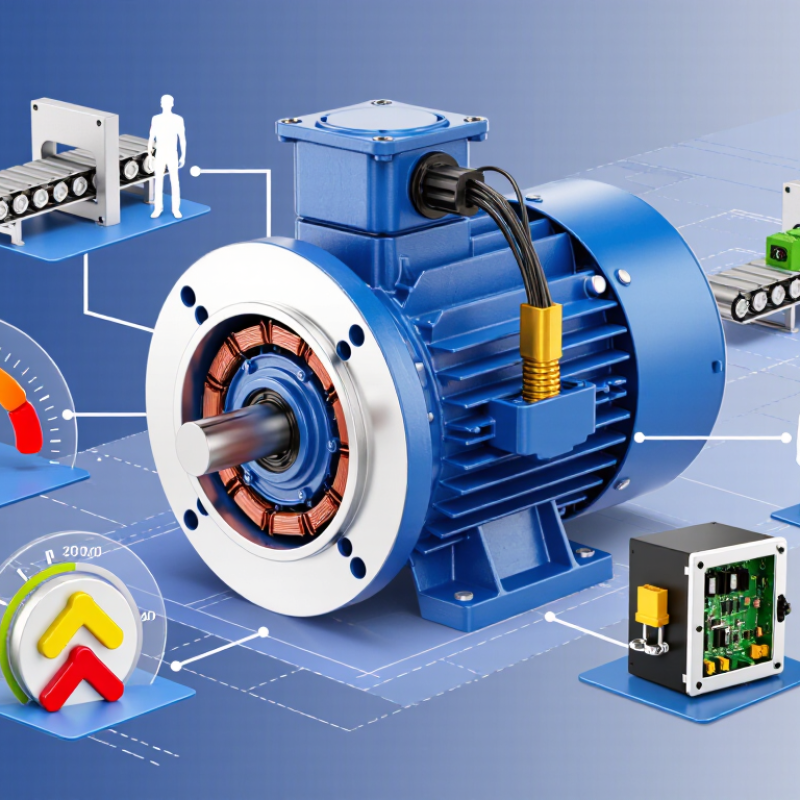
Define the Application and Its Operating Requirements
Define the application before comparing permanent magnet motor ratings. Record the load’s torque and speed across a full operating cycle, including startup, acceleration, and idle periods. A conveyor may run steadily, while a mixer can demand sharp bursts of torque. Note the driven machine’s inertia, starts per hour, available supply, and required control method. Small details matter.
The International Energy Agency’s 2011 report, Energy-Efficiency Policy Opportunities for Electric Motor-Driven Systems, estimates that these systems use about 45% of global electricity. The U.S. Department of Energy’s 2014 industry sourcebook puts motor-system use at roughly 70% of U.S. manufacturing electricity. These figures make duty profile and system efficiency practical selection criteria, not paperwork. Compare expected load with the motor’s torque-speed curve, and check whether the drive can manage the required speed range. That matters.
Record the real operating environment, too: ambient temperature, dust, moisture, vibration, and available cooling. High temperatures and excessive current can threaten permanent magnets, so confirm overload limits with the motor and drive specifications. A neat spreadsheet can still miss an occasional jam or a hot enclosure. Be cautious with assumptions; measured current and cycle timing are better evidence than a “typical” duty estimate. Include room for future changes, but avoid oversizing without a reason.
Compare Permanent Magnet Motor Types and Designs
Permanent magnet motors differ in magnet placement, rotor shape, and cooling design. Surface-mounted magnets sit on the rotor exterior. This layout is relatively straightforward and can deliver strong torque at low speeds. However, magnets need secure retention when rotor speed rises. Check the motor’s speed range and operating temperature, not just its rated power.
Interior permanent magnet motors place magnets inside the rotor. Their design can combine magnet torque with reluctance torque, which may improve performance across a wider speed range. It can also make the rotor more complex to manufacture. Consider this type for equipment that must accelerate quickly or run above base speed. Test the actual load profile. A catalog rating alone can mislead.
Radial-flux motors are common, with magnetic flux crossing the rotor radially. Axial-flux designs use a flatter, disc-like form and may suit installations with limited length. Cooling matters in both. A motor in a dusty enclosure may need a different thermal strategy than one with open airflow. Small details count. Compare torque, speed, efficiency, dimensions, cooling, and inverter compatibility against the machine’s real duty cycle. I would still verify those assumptions with a prototype; paper comparisons miss things.
How to Choose a Permanent Magnet Motor?
Compare common permanent-magnet rotor designs across practical selection factors. Scores show qualitative design tendencies on a 1–5 scale, not standardized test results; actual performance depends on the motor and application.
Quick guide: Surface-mounted designs are comparatively simple, while interior-magnet designs support stronger field weakening and mechanically retain magnets within the rotor. Axial-flux designs can provide high torque in a compact axial package, but their construction and integration can be more demanding. Choose based on speed range, cooling, packaging, cost, and control requirements.
Match Motor Performance to Load and Duty Cycle
A permanent-magnet motor should be matched to the load it will actually drive, not just its rated power. Check the required torque and speed across the full operating range. A conveyor may need steady torque, while a packaging axis may demand brief, repeated bursts. These profiles call for different motor and drive choices. Heat matters.
Duty cycle affects how much current a motor can safely handle over time. Note the length of each run, rest periods, start frequency, and peak-load duration. For example, a motor that lifts a heavy fixture for ten seconds every minute faces a different thermal demand from one running continuously. Ambient temperature, cooling, and the driven load’s inertia also matter. Use manufacturer performance curves and thermal limits, then verify the selection under realistic conditions. Calculations help, but field conditions can be messier than a spreadsheet suggests.
Tips: Record normal and peak torque, speed, and run time before comparing motors. Leave sensible margin for unexpected load changes, but avoid oversizing without reason; it can affect cost and control quality. If measurements are uncertain, test the motor with the actual load and monitor temperature.
Assess Efficiency, Environment, Size, and Control Needs
How to Choose a Permanent Magnet Motor?
Efficiency matters most when it matches the real duty cycle. Check the motor’s efficiency curve at the speeds and loads it will actually see, not only its peak rating. A motor running for long shifts may justify a higher purchase cost through lower energy use. For a small actuator that operates briefly, the difference may matter less. Check heat, too. A motor that repeatedly approaches its thermal limit may need a larger frame or better cooling.
The environment can change the choice quickly. Dust, moisture, vibration, and ambient temperature affect insulation, bearings, and cooling. A motor mounted near a washdown area needs suitable enclosure protection; one beside a vibrating machine may need a sturdier mounting arrangement. Read the operating limits carefully. The installation rarely behaves like a clean test bench.
Size and control needs belong in the same decision. Compare the available space with the required torque, speed range, and starting load. Then confirm that the drive can support the motor’s feedback, current, and braking requirements. A compact motor may fit neatly but leave little room for heat to escape.
Easy to overlook.
There is no perfect pick, and I would not treat a catalog rating as a guarantee. Ask for performance data under conditions close to your application, and leave room for some uncertainty.