How to Choose the Best Electrical Steel for Your Project?
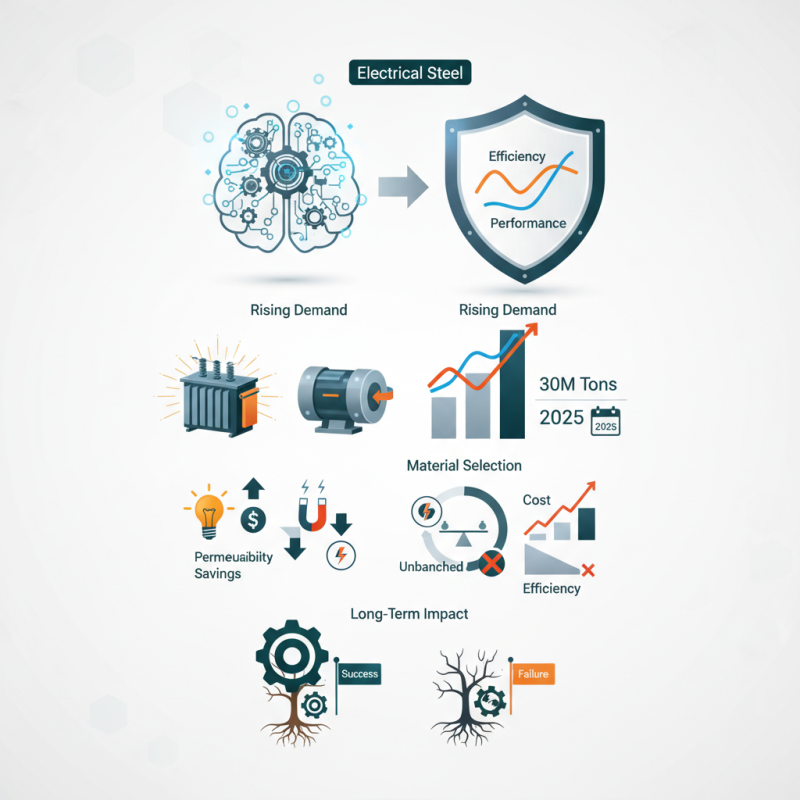
Choosing the right Electrical Steel is vital for the success of any project. This choice can significantly impact efficiency and performance. The global demand for electrical steel is rising, expected to reach over 30 million tons by 2025. This is driven by the growing need for energy-efficient devices.
Electrical Steel is crucial for transformers and electric motors. Its magnetic properties enhance performance while reducing energy loss. Inaccurate material selection can lead to suboptimal results, raising costs in the long term. A study by the International Energy Agency indicates that improving electrical steel efficiency could save millions in energy costs.
Be mindful of the specifications. Consider your project’s requirements, like permeability and core loss. Unbalanced choices could lead to inefficiencies. Many projects overlook the importance of these factors, resulting in long-term consequences. Reflect on what materials best serve your goals, as the right Electrical Steel can make or break your initiative.
Understanding the Basics of Electrical Steel and Its Types
Electrical steel is crucial in the efficiency of motors and transformers. Understanding its types can greatly impact your project outcomes. The main categories are silicon steel, grain-oriented steel, and non-oriented steel. Each has distinct properties. Silicon steel, for instance, is popular due to its excellent magnetic properties. It works efficiently in high-frequency applications, reducing energy losses.
Grain-oriented electrical steel has a specific grain structure. This structure enhances magnetic performance in one direction. Its application is mostly found in transformers where optimal magnetism is key. However, it can be more expensive than other types. Non-oriented steel is more versatile. While it lacks the directional advantages of grain-oriented steel, it performs well in various applications. This makes it a popular choice for a wide range of electrical devices.
Choosing the right type requires careful consideration. Analyze your project's specific needs. Factors like cost, performance, and efficiency are essential. Reflect on your requirements and think deeply about how each type fits. Misjudgments can lead to inefficiencies. A thorough understanding can help you avoid common mistakes.
Key Properties to Consider in Electrical Steel Selection
Choosing the right electrical steel is crucial for performance. Key properties to consider include magnetic permeability and core loss. Magnetic permeability affects how easily the material can be magnetized. Higher permeability allows efficient energy transfer. Reports indicate that materials with permeability above 1.5 T are ideal for high-efficiency applications.
Core loss is another vital factor. It defines energy losses in the form of heat during operation. Studies reveal that transformers made with silicon steel can reduce core losses by up to 25%. However, some variants may not meet desired efficiency levels, especially under high-frequency conditions. This inconsistency prompts a careful evaluation of the trade-offs between cost and performance.
Additionally, consider the thickness of the steel. Thinner sheets improve efficiency but are more challenging to manufacture. Industry reports highlight that some manufacturers struggle to maintain quality at lower thicknesses. This often results in a compromise on electrical performance. Continuous evaluation of the trade-offs is essential for optimal selection.
How to Choose the Best Electrical Steel for Your Project? - Key Properties to Consider in Electrical Steel Selection
| Property | Description | Importance |
| Magnetic Induction | The ability of the steel to be magnetized, affecting efficiency in motors and transformers. | High |
| Core Loss | Energy lost in the form of heat due to magnetic hysteresis and eddy currents. | Critical |
| Electrical Conductivity | Measure of the material's ability to conduct electric current, affecting performance. | Moderate |
| Mechanical Properties | Strength and ductility of the steel, influencing durability and handling. | Moderate |
| Thickness | The gauge of steel used, impacting manufacturing processes and applications. | Variable |
| Temper and Treatment | Processes that enhance performance characteristics, including heat treatment. | High |
Applications of Electrical Steel in Various Industries
Electrical steel plays a critical role in various industries. It is essential in the production of transformers, electric motors, and generators. In fact, global consumption of electrical steel has been projected to reach 19 million tons by 2025, according to industry reports. This rising demand stems from the growth in renewable energy sectors and electric vehicle production.
In the automotive industry, electrical steel is vital for enhancing motor efficiency. A recent study indicates that using higher-grade electrical steel in motors can increase efficiency by up to 6%. This improvement is crucial as automotive manufacturers aim to meet stringent emissions standards. However, the production of high-grade steel often involves complex and costly processes. Some manufacturers may overlook these costs, resulting in suboptimal product performance.
Similarly, electrical steel is prominent in power generation and distribution. The market for this material in transformers is expected to grow due to the increasing need for energy-efficient power transmission. Yet, the variation in steel quality can lead to inefficiencies. Some projects might rely too heavily on lower-quality steel to cut costs. This choice can compromise performance and increase energy losses, leaving room for reflection and improvement in material selections.
Evaluating Cost vs. Performance in Electrical Steel Choices
When choosing electrical steel, cost and performance often clash. It's crucial to evaluate your project's requirements. Are you prioritizing efficiency or budget constraints? A high-performance steel might save costs in the long run but is typically more expensive upfront. Look into specific grades and their properties.
Consider the application's operational environment. Some operations may demand higher permeability for better performance. Others may prioritize lower costs, leading to compromises in efficiency. Aim for a balance that meets both performance standards and budget limitations. Small mistakes can lead to bigger problems later. Testing samples before finalizing is key.
Understanding the nuances of electrical steel grades can be overwhelming. Prices can vary significantly based on performance levels. Remember, a cheaper option might not always be the best choice. Attention to detail is vital here. Analyze every aspect of your project's needs closely. Each decision impacts the overall effectiveness and efficiency of the system.
Testing and Standards for Quality Assurance in Electrical Steel
Testing and standards play a crucial role in ensuring the quality of electrical steel. The performance of electrical steel significantly impacts the efficiency of transformers and electric motors. Industry reports indicate that high-quality electrical steel can enhance energy efficiency by up to 10%. This is vital for meeting today’s energy-saving goals.
Quality assurance standards often include magnetic property tests. These include measurements of induction and core loss. It’s essential to use standardized testing methods like ASTM A801. This ensures that products meet specific performance criteria. However, many manufacturers may overlook some tests. This oversight can lead to subpar performance in end applications.
The measurement of thickness is another critical factor. Variations in thickness can affect magnetic performance. Manufacturers need to adhere rigorously to tolerances outlined in industry standards like IEC 60404. Non-compliance can yield significant performance issues. In many cases, it is difficult to maintain consistency across batches. Continuous monitoring is necessary for reliable results. Regular audits and adjustments can help address this challenge.