China Top Waterproof LED Screen Supplier for Global Buyers
Outdoor visual communication is moving beyond fair-weather installations. MarketsandMarkets reported that the global LED display market could grow from about USD 7.3 billion in 2023 to USD 11.1 billion by 2028. Outdoor demand remains important. Retail streets, stadiums, transport hubs, and construction sites need bright images through rain, dust, and temperature changes.
A Waterproof Led Screen is not simply an indoor panel with a sealed cabinet. It needs suitable protection, drainage, corrosion control, stable power systems, and tested module connections. IEC 60529 defines IP protection ratings, while IP65 and IP66 are common reference points for outdoor LED applications. The right rating depends on installation direction, local weather, cleaning methods, and exposure duration. Water resistance is not absolute.
China has become a major LED manufacturing base, supported by mature supply chains for cabinets, modules, control systems, and spare parts. Global buyers should examine factory testing records, pixel consistency, brightness data, color calibration, and warranty procedures. SGS, TÜV, CE, RoHS, and other documentation can support verification, but certificates should match the actual product model. Marketing claims alone are insufficient.
This guide explores how China’s top waterproof LED screen suppliers serve international projects. It considers engineering experience, production quality, customization, shipping support, and after-sales response. Grand View Research and other market reports show strong digital signage growth, yet forecasts vary by region and application. That uncertainty matters. A cheaper screen may fail after one wet season. No display is maintenance-free, and even a well-designed screen needs inspection, ventilation checks, and practical installation planning.
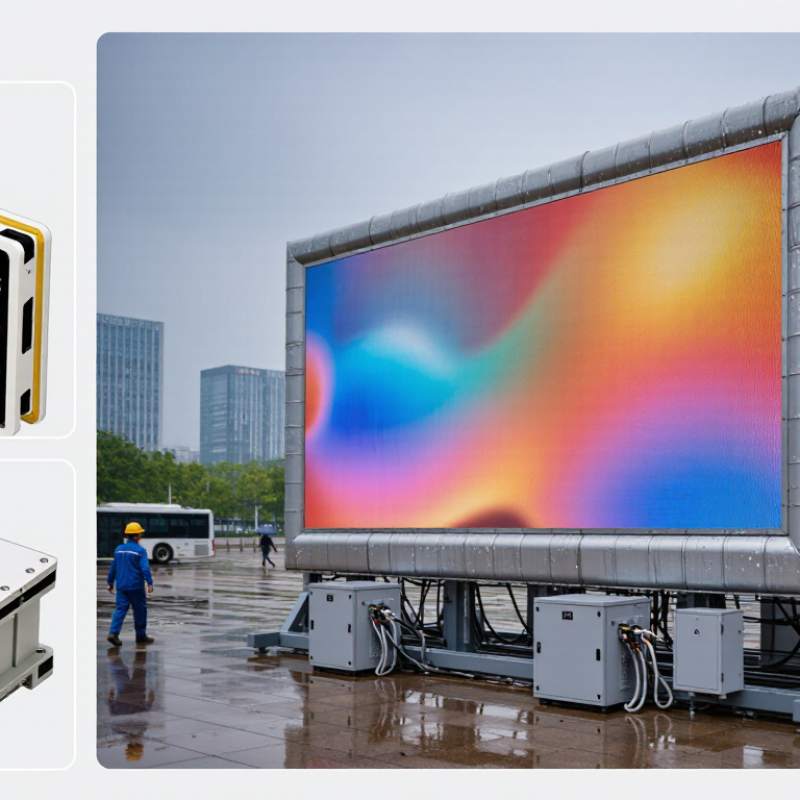
What Defines a Waterproof LED Screen for Global Buyers
For global buyers, a waterproof LED screen means more than a sealed cabinet. It must survive rain, dust, temperature changes, and repeated maintenance. IEC 60529 defines IP65 as dust-tight protection with resistance to water jets. IP66 offers stronger water-jet protection, but neither rating permits continuous immersion. A high IP number is not a complete answer.
The enclosure should use sealed cable glands, corrosion-resistant fasteners, and protected power connectors. Drainage matters too. Water trapped behind a module can damage circuits after heavy rain.
Outdoor testing should include spray exposure, thermal cycling, brightness checks, and repeated cabinet opening. In practical projects, technicians should inspect gaskets after installation, not only trust factory documents. Small gaps often appear around corners.
A 2024 market analysis by Grand View Research valued the global LED display market at approximately USD 7.6 billion in 2023. It also expects continued growth through 2030, driven partly by outdoor advertising and public applications. That growth increases the need for measurable specifications.
Buyers should request IP test evidence, operating-temperature ranges, humidity limits, and salt-spray results. Coastal projects need extra protection. Standard waterproofing may be insufficient there. I have seen specifications focus heavily on IP ratings while ignoring heat buildup and service access. That approach needs reconsideration. Reliable suppliers explain test conditions clearly, because “waterproof” can mean very different things across climates.
How to Evaluate a Reliable Waterproof LED Screen Supplier
For global buyers sourcing from China, evaluating a waterproof LED screen supplier requires more than checking a product page. Start with the enclosure rating, usually IP65 or higher for outdoor faces. Ask whether testing covers the complete screen, not only one module. Request dated reports, wiring diagrams, and photos from real installations. A trustworthy supplier explains brightness, refresh rate, viewing distance, and power consumption clearly. Vague answers are warning signs.
Inspect a sample cabinet before placing a large order. Look for sealed cable entries, drainage paths, corrosion-resistant materials, and accessible maintenance points. Test the screen through rain simulation, heat exposure, and repeated power cycles.
Ask how brightness changes after long operation. Good suppliers provide written warranties, spare-part guidance, inspection support, and realistic delivery schedules. Their engineers should discuss local weather, mounting conditions, and maintenance skills. Waterproofing can fail after careless installation. The supplier should explain that risk.
Tips: Compare at least three quotations, but do not choose by price alone. Verify production capacity through a live video inspection or independent audit. Check whether quality checkpoints and repair procedures are documented. Ask for references in similar climates. Keep every technical promise in the contract. No supplier is perfect. I would question claims of zero failures, lifetime brightness, or maintenance-free operation. Honest limitations often show better control, though this point deserves careful testing.
International Purchasing, Certification, and After-Sales Support
China Top Waterproof LED Screen Supplier for Global Buyers
International purchasing requires more than a competitive quotation. For outdoor LED screens, buyers should verify waterproof ratings, cabinet materials, power protection, and installation conditions. In field projects, I have learned that coastal air can damage connectors faster than heavy rain. Ask for current test reports, product specifications, and certification documents matching your destination market. Certificates should be traceable, not simply shown as scanned files. A perfect document set is not always enough.
Tips: Request a sample cabinet before ordering. Check sealing around cable glands and module edges. Confirm brightness, viewing distance, and maintenance access. Ask whether spare modules, receiving cards, and power supplies are included. Keep every approval record with the purchase contract.
Reliable after-sales support should begin before shipment. A capable supplier can provide packing photos, loading records, wiring diagrams, and remote commissioning guidance. Clear response times matter when a screen fails during a public event. Confirm warranty coverage, replacement procedures, and technical support hours in writing. It is also wise to agree on spare-part quantities before production. I have seen buyers focus on certification, yet overlook local voltage and mounting conditions. That mistake can create avoidable delays. Regular video inspections and serial-number records improve accountability across borders.